Principal Investigator
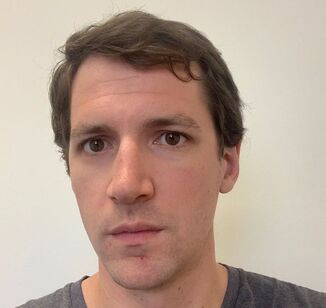
Jeremy J Berg ([email protected])
I am an Assistant Professor of Human Genetics at the University of Chicago. Before that I earned my PhD working with Graham Coop at UC Davis, and spent some time as a post-doc working with Guy Sella at Columbia University.
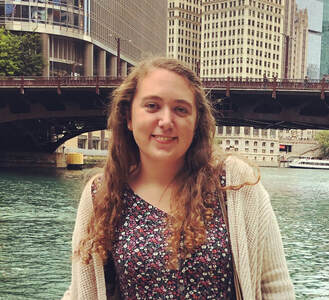
In my spare time I enjoy running and hiking.
I am an Assistant Professor of Human Genetics at the University of Chicago. Before that I earned my PhD working with Graham Coop at UC Davis, and spent some time as a post-doc working with Guy Sella at Columbia University.
In my spare time I enjoy running and hiking.
Postdocs
Walid Mawass ([email protected])
Walid is an evolutionary geneticist specializing in quantitative and population genetics, with a broad interest in the evolution of complex traits. His research focuses on how adaptive changes occur in populations and how natural selection shapes trait distributions and population outcomes.
During his Ph.D. research with Emmanuel Millot at the University of Quebec in Trois-Rivières, he used pedigree-based quantitative genetics to study life-history evolution in historical and longitudinal human population data. This work included exploring genotype-by-environment interactions and evolutionary stasis. As a Postdoctoral Scholar with Joanna Masel at the University of Arizona, he investigated the role of beneficial mutations in the long-term persistence of small populations.
Currently, in the Berg Lab, he is examining how incomplete control of complex population structure can introduce biases in polygenic score analyses. His other interests include modeling life-history traits, studying indirect genetic effects across familial and social networks, and uncovering the genetic basis of human migratory movement.
Beyond that, he is an avid writer of fiction and music composer with a strong affliction for receiving feline cuddles.
Walid is an evolutionary geneticist specializing in quantitative and population genetics, with a broad interest in the evolution of complex traits. His research focuses on how adaptive changes occur in populations and how natural selection shapes trait distributions and population outcomes.
During his Ph.D. research with Emmanuel Millot at the University of Quebec in Trois-Rivières, he used pedigree-based quantitative genetics to study life-history evolution in historical and longitudinal human population data. This work included exploring genotype-by-environment interactions and evolutionary stasis. As a Postdoctoral Scholar with Joanna Masel at the University of Arizona, he investigated the role of beneficial mutations in the long-term persistence of small populations.
Currently, in the Berg Lab, he is examining how incomplete control of complex population structure can introduce biases in polygenic score analyses. His other interests include modeling life-history traits, studying indirect genetic effects across familial and social networks, and uncovering the genetic basis of human migratory movement.
Beyond that, he is an avid writer of fiction and music composer with a strong affliction for receiving feline cuddles.
Jennifer Blanc ([email protected])
Jennifer joined the lab as a graduate student from the Human Genetics program in 2019 and completed her thesis in 2024. She is currently a postdoc continuing her research on method development for polygenic scores. Specifically, her work focuses on controlling for confounding in genome-wide association studies and building models to better understand how uncorrected confounding biases polygenic score predictions.
Graduate Students
Vivaswat Shastry ([email protected])
Vivaswat (Viv) is a graduate student in Genetics, Genomics and Systems Biology. He joined the lab in Autum of 2021. For his PhD, he is working on models and methods for inferring selection using theory and simulations. Outside of work, he enjoys pondering on the human experience and making people laugh!
Kellen Riall ([email protected])
Kellen is a graduate student in the Genetics, Genomics, and Systems Biology who joined the lab in Autumn of 2022. He did his undergraduate work at Arizona State University, receiving degrees in Biological Sciences and Biophysics. While there, he became interested in population genetics, and worked in the lab of Jeffrey Jensen for a few years studying the effects of background selection on demographic inference quality. His research in the Berg lab is focused on improving our understanding of how evolutionary forces shape the genetic architecture of complex diseases. In his free time, he enjoys traveling, gaming, jet skiing, and wearing shorts and short sleeves at practically any temperature above freezing
Sharon Zhou ([email protected])
Sharon is a graduate student in the Evolutionary Biology program, who joined the lab in Autum of 2024. She is interested in the evolution and genetics of complex traits and diseases. She is currently working on developing quantitative genetic models to characterize signals of background selection as well as its impact on genetic diversity and complex trait architecture. She also works in the field of macroevolution (advised by Dave Jablonski) on spatial and temporal structure of biodiversity, in particular the origin and differential sorting of morphological complexity in marine invertebrates.